27th November - 6th December 2026
9:00 - 21:00
House of Croatian Defenders
Leharova 1, Pula
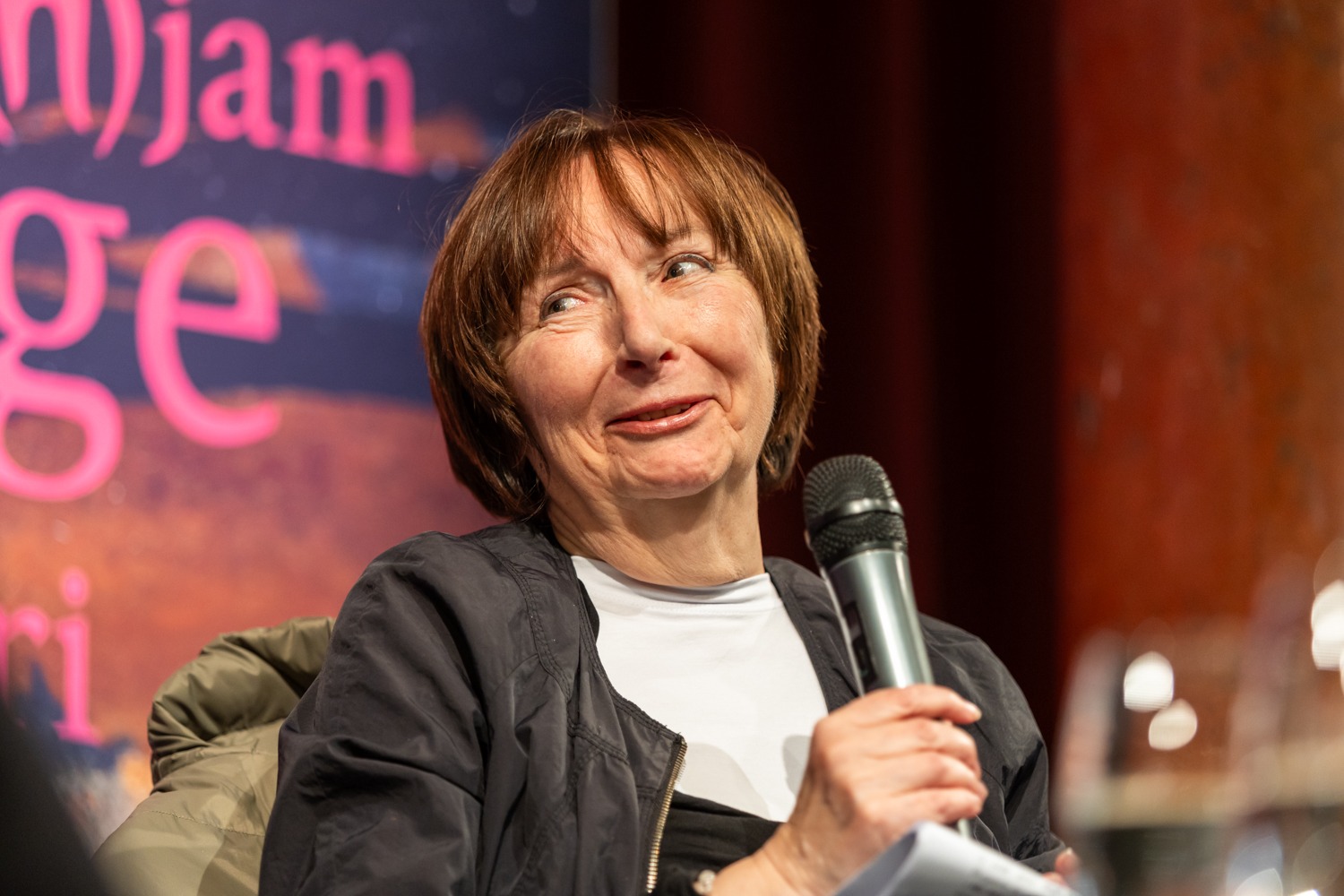
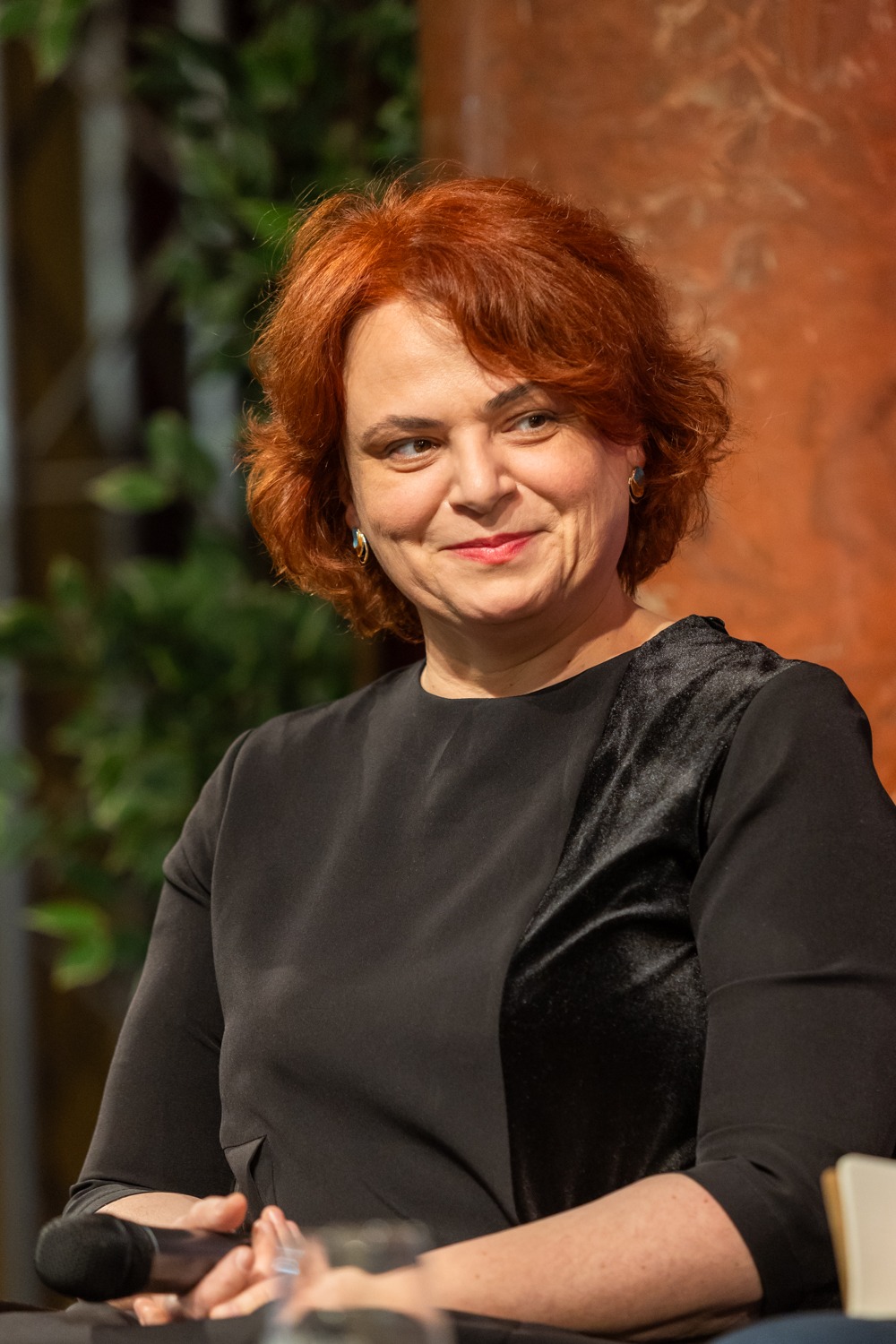
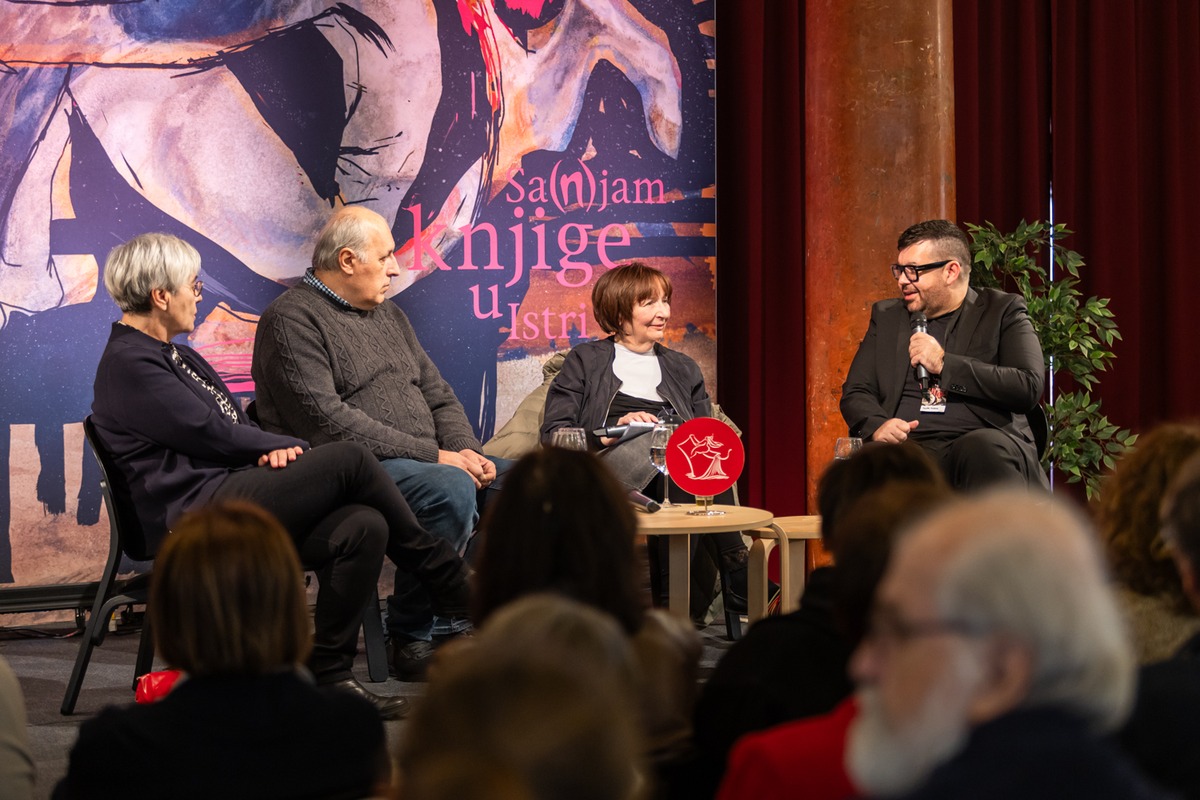
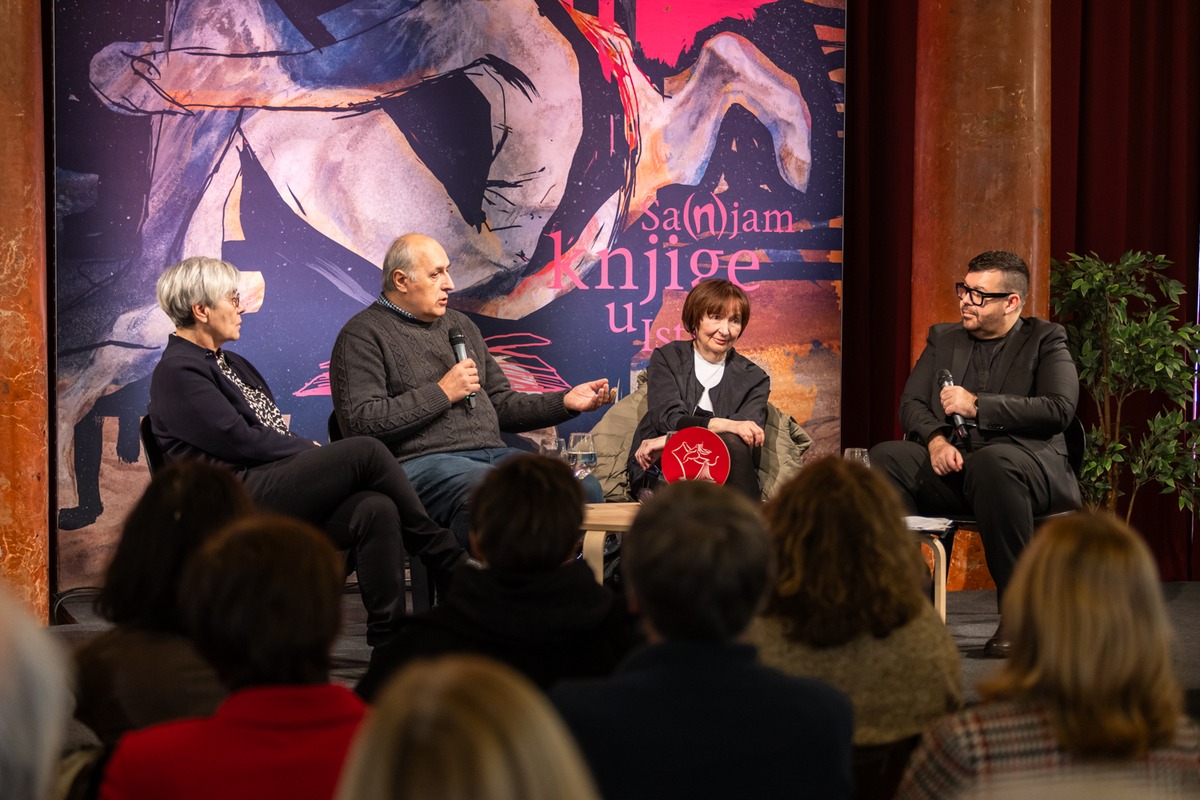
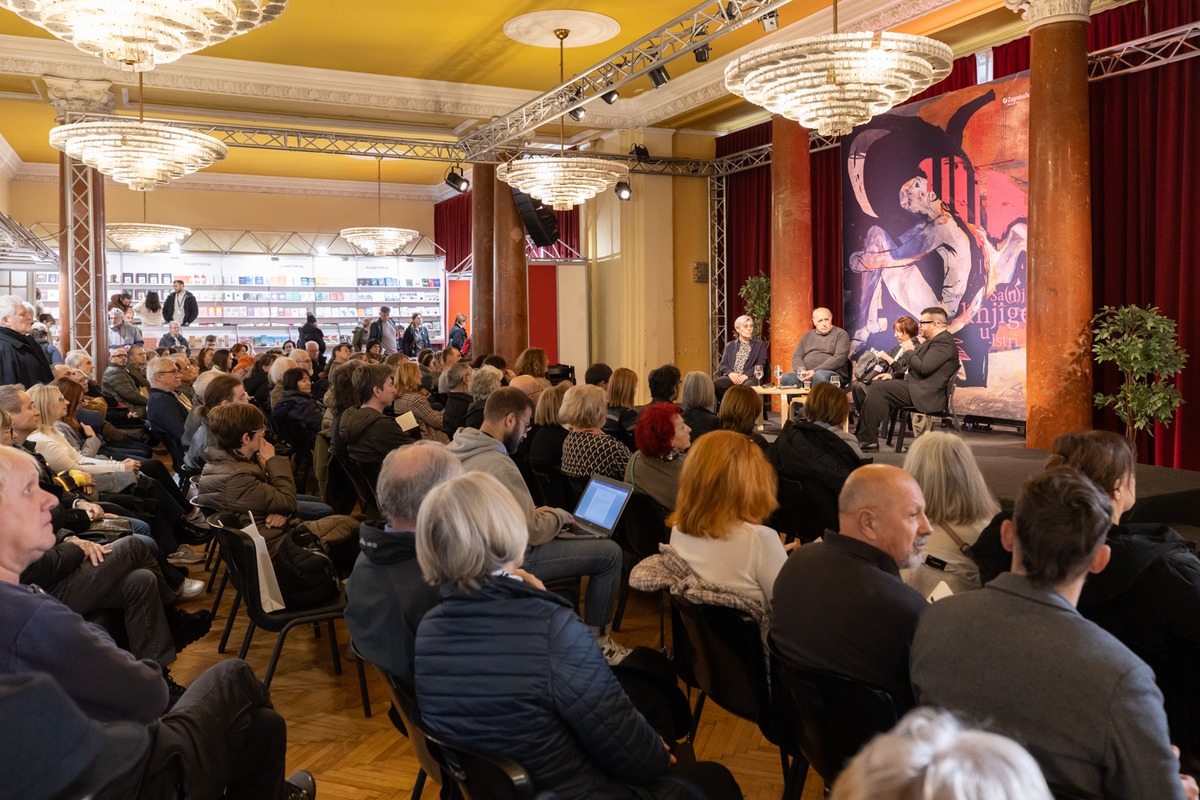
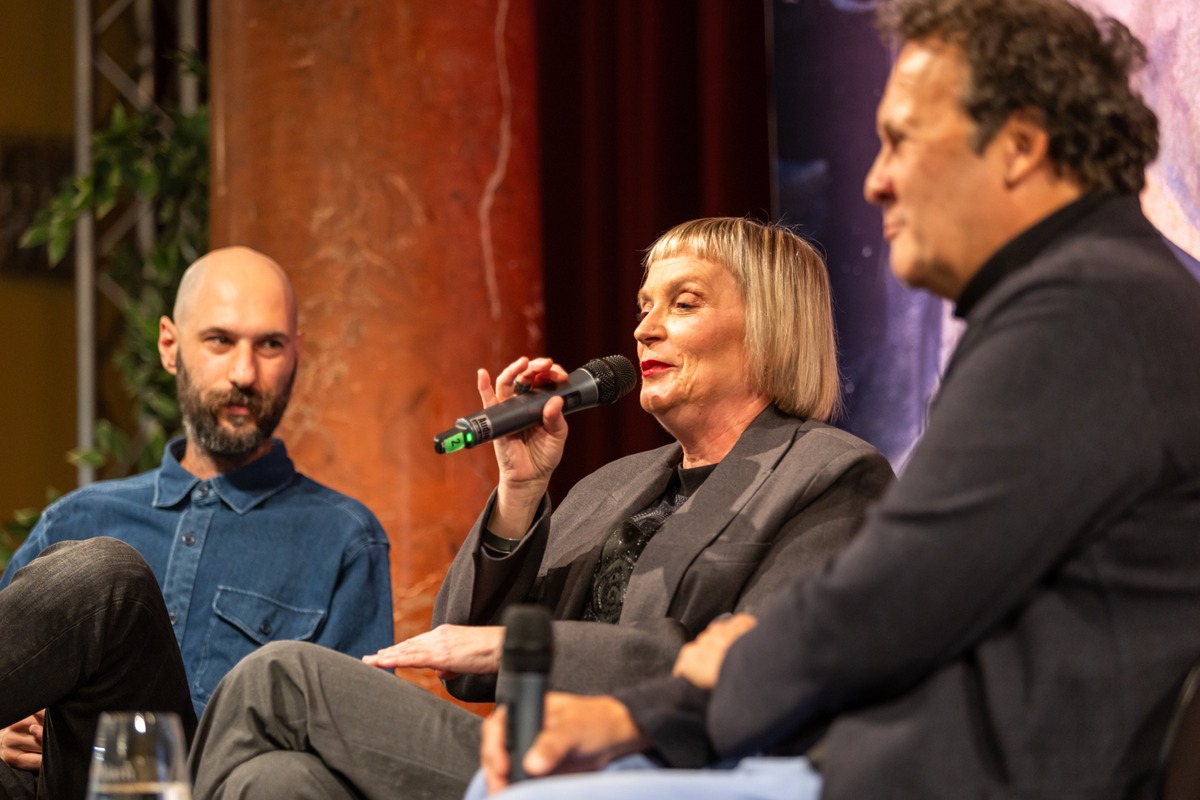
“We shouldn’t be arrogant and think the world ends with us. Some new people are coming who could, at any moment, change the world”, said writer and philosopher Liljana Filipović at the roundtable “Disquiets of today”, held on Sunday, the third day of the 31st Book Fair in Istria, which is being held until the 7th of December in Pula. The astronomer and futurologist Korado Korlević, along with art theorist and historian Leonida Kovač, discussed this year’s fair topic, disquiets, at a roundtable hosted by Aljoša Pužar.
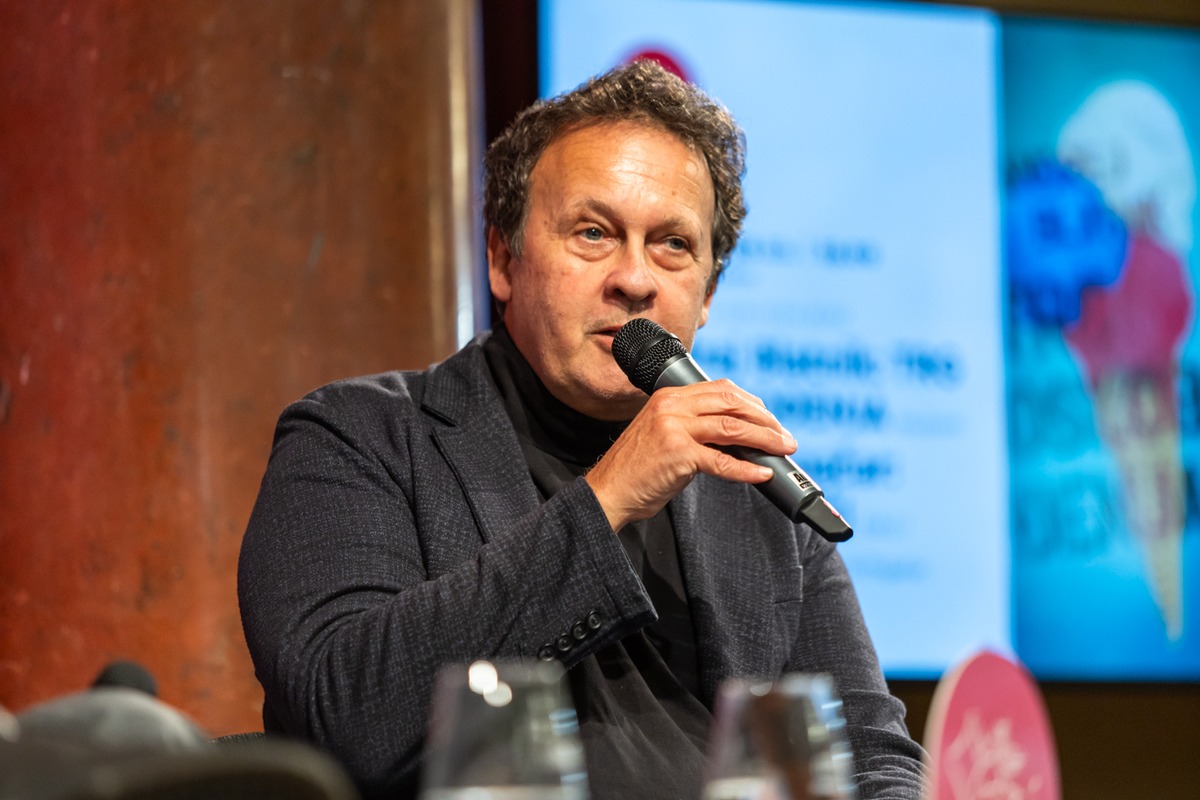
“There have always been disquiets, and now a very specific disquiet has happened. Our children are refugees on their own planet and will very soon become homeless. We comfort ourselves with love and laughter. Let's ask ourselves a question: “When is the last time we laughed? When have we loved?”. These questions were asked by Liljana Filipović, who thinks that “we talk of the past because we're severely/horribly afraid of the future”. “There is no chance the Titanic will save itself”, proclaimed Korado Korlević, while emphasizing: “Young generations have no passion and they are completely unequipped for creation and rebellion, and when they do rebel - they do it for the wrong reasons. We, as creatures, are becoming genetically programmed androids. There is no magic wand, and the important question is whether we will we be able to retain humanity in the battle against the machine. Korlević points out that “we live in a society which, in the time of manipulation by social media, divides into castes”, emphasizing that “for the first time we live in a world in which a lie isn't a deadly sin but a virtue. We forget that capital has human characteristics and is superintelligent, while the progress of artificial intelligence isn't developing linearly but surging, climbing up the stairs”. “The word disquiet is often used as a euphemism for the worst kind of violence. I am not disquiet anymore. I am horrified by the indifference towards the galloping violence. Indifference is a form of horror!”, said Leonida Kovač. She’s against generalisation and thinks we shouldn't generalise the younger generation either. She highlighted the importance of combating narrow-mindedness and fascism and concluded: “Each one of us has their own way of resisting narrow-mindedness and fascism.”
“I am a big fan of Johnny Štulić, however, there is no disjunctive conjunction between disquiet and passion – they are the same.“ said Mario Pogačar when his new book Esej o noći (Essay on the Night, V.B.Z.) and Andrej Blatnik's book Trg oslobođenja (Liberation Square, Buybook) were presented in the Disquiet/Ljubljana bere programme, led by Jagna Pogačnik, who brought the good new energy to the fair.
“Esej is a novel of our time. The day has its order which defines society and the night is much more open, and its way of thinking is meandering. The night and the essay are formatively compatible”, said Pogačar and added that when he creates literature he is interested first and foremost in time more than in people or cities. For him, the main characters of all literary works are citations.
“We're all built out of some cultural past, some admit it, and others don't. I wrote the stories in my novel Trg oslobođenja from the perspective of people who, in the time in which I’m writing (10 days of war in Slovenia, author’s note), were nothing. They appeared to me as good onlookers. My hero is one of many nothings, said Andrej Blatnik, and, talking about the reception of his novel, he also pointed out that the German edition was well received, which goes in favour of the thesis that it’s a transgressive and transnational book.
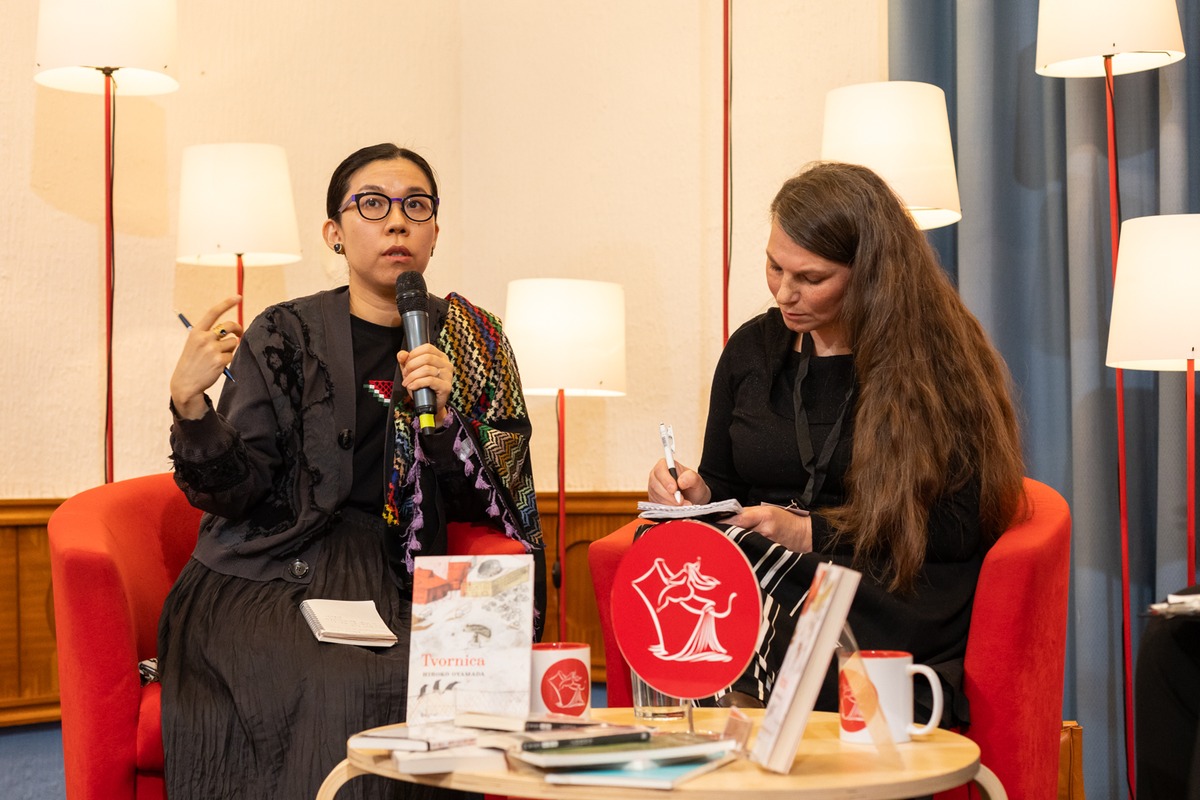
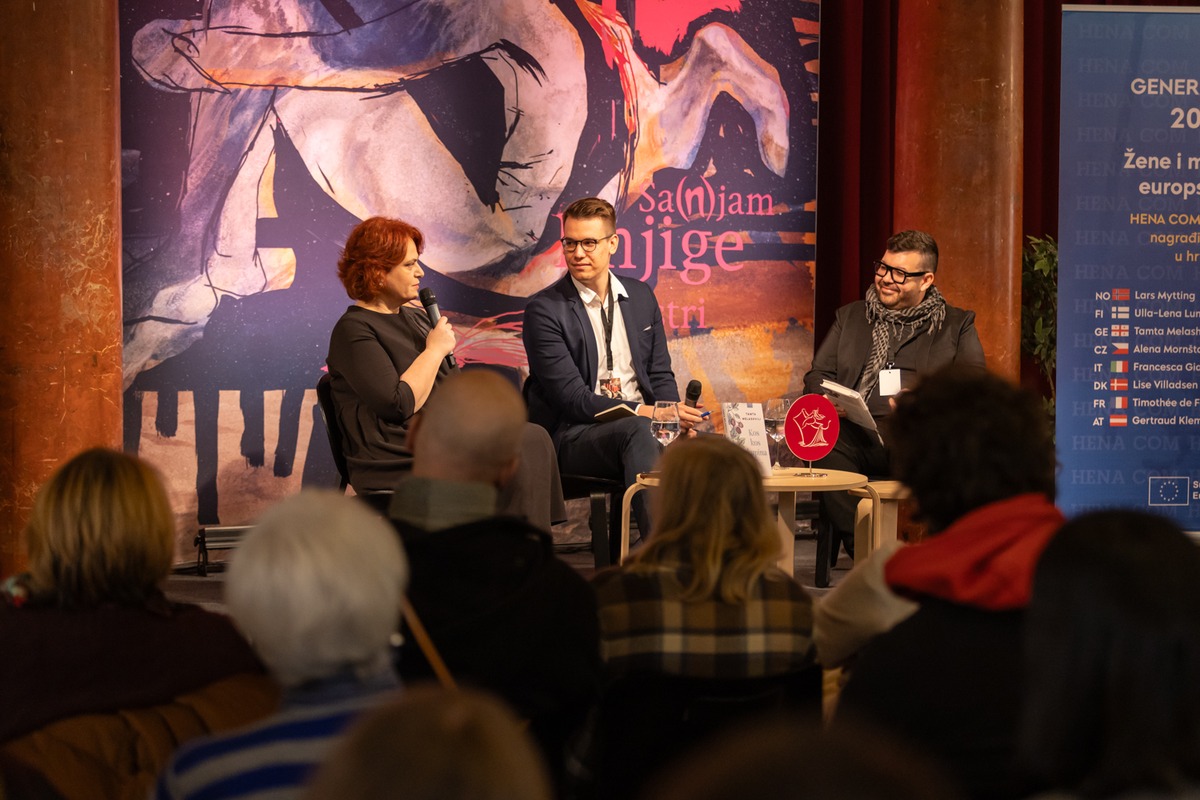
“What does it mean to be a 48-year-old unmarried Georgian woman in a Georgian village?” This was a question Aljoša Pužar directed to the Georgian writer Tamta Melashvili, referring to Etero, the main hero of her book Kos kos kupina (Blackbird, Blackbird, Blackberry, Hena com), presented in the Power of a Woman programme. “I began writing the book at the start of the pandemic. I had just turned 48 and didn't know much about middle-aged women, who almost aren’t represented in literature and art. I began questioning what it means to be middle-aged, because life goes on and, regardless of the years, many things happen just as they have happened to my main hero”, said Tamta Melashvili, while Aljoša Pužar highlighted the nice ironic distance with which the author builds the character of a woman who is constantly questioning herself but is at the same a very calm person with an impressive voice. “While writing this novel, writing was for me a very nice transformative experience. I was led through the story by the character of my main hero and shown the way in which the process of creative writing becomes possible”, said Melashvili, and enriched this year’s Fair’s Babylonian library with the Georgian language, reading the original passages from her novel that was adapted into a movie.
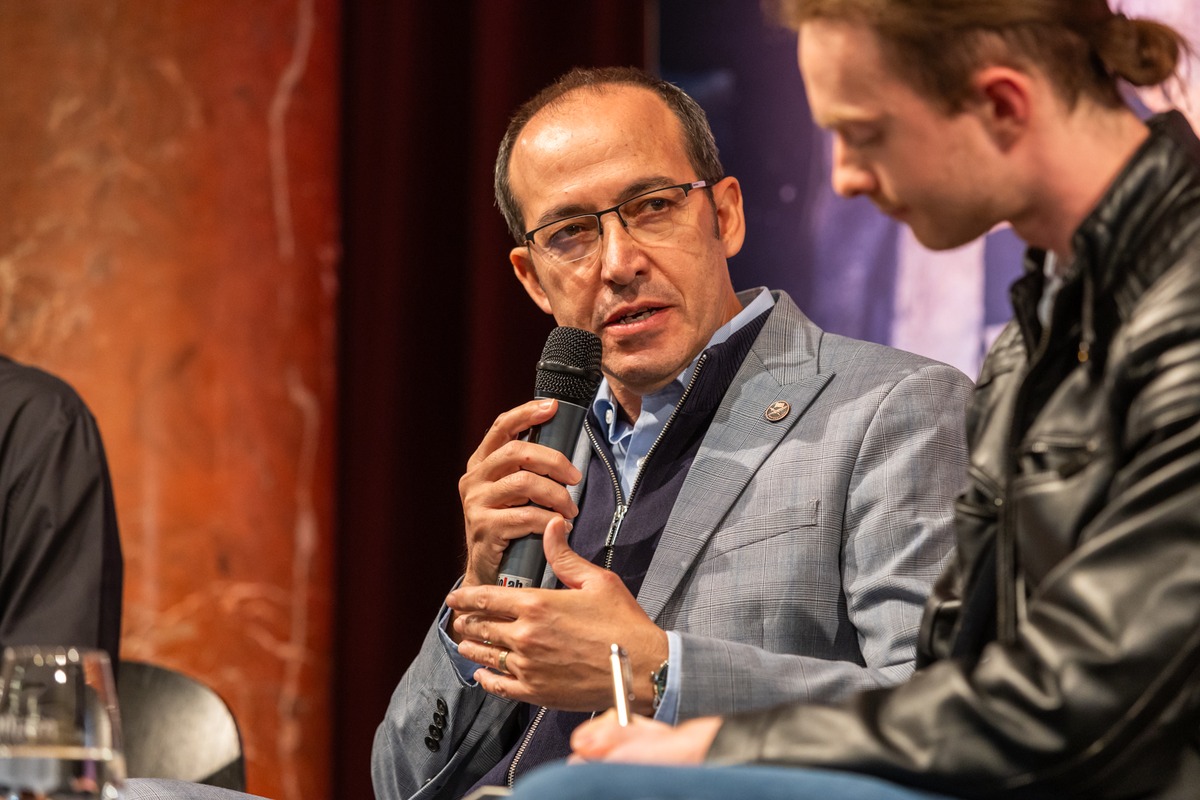
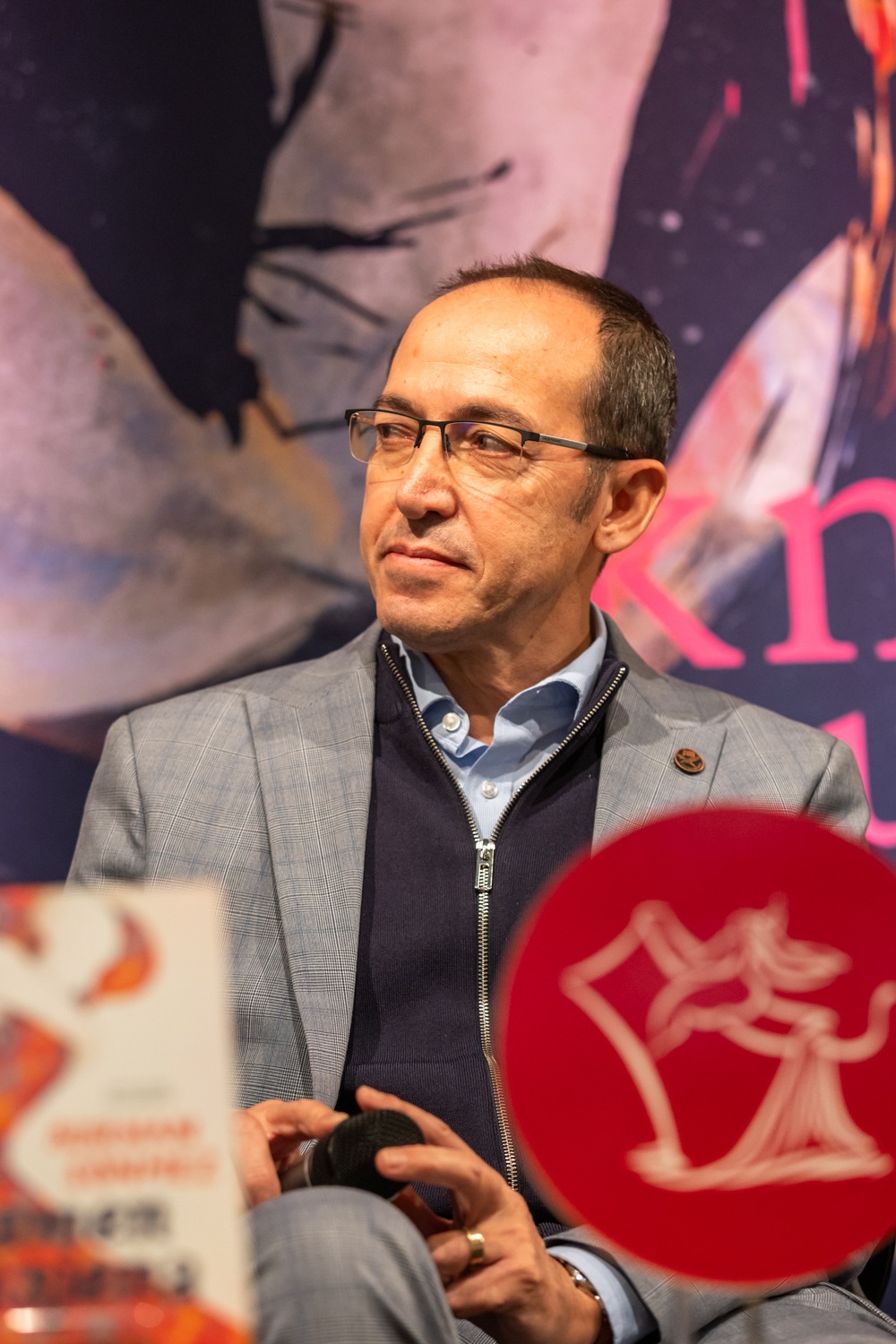
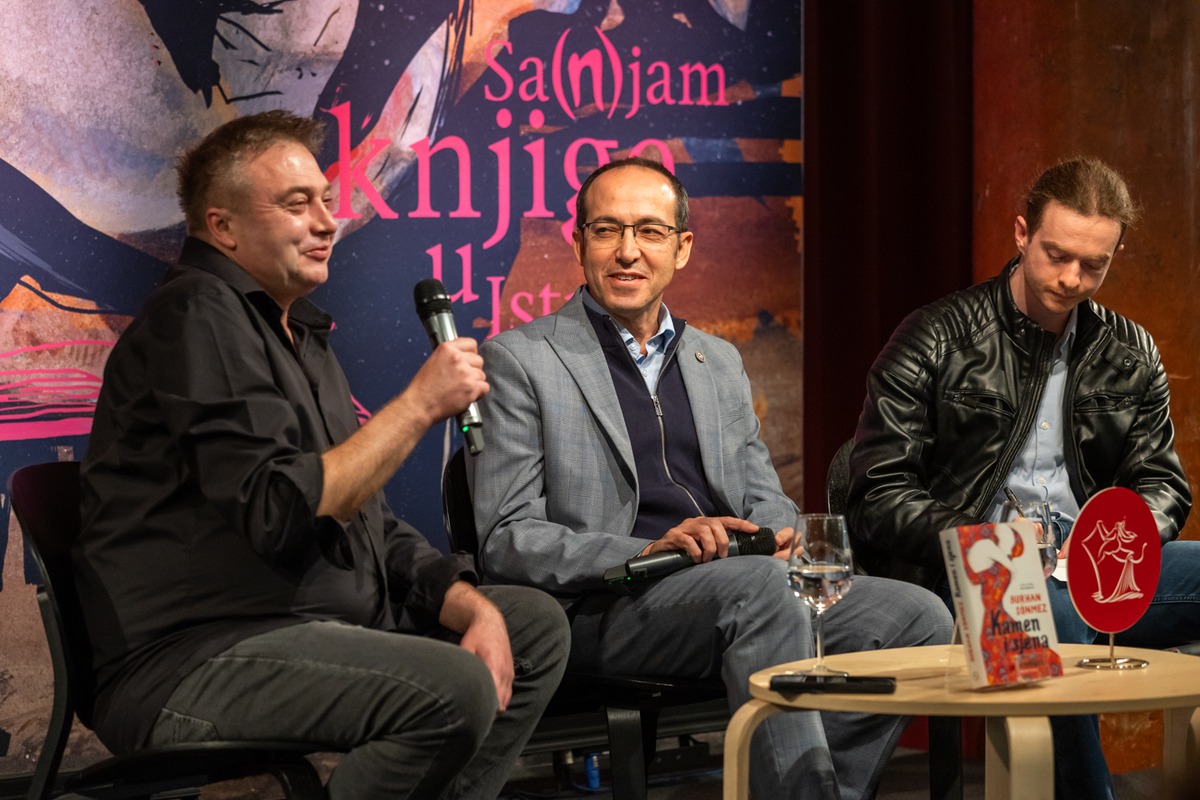
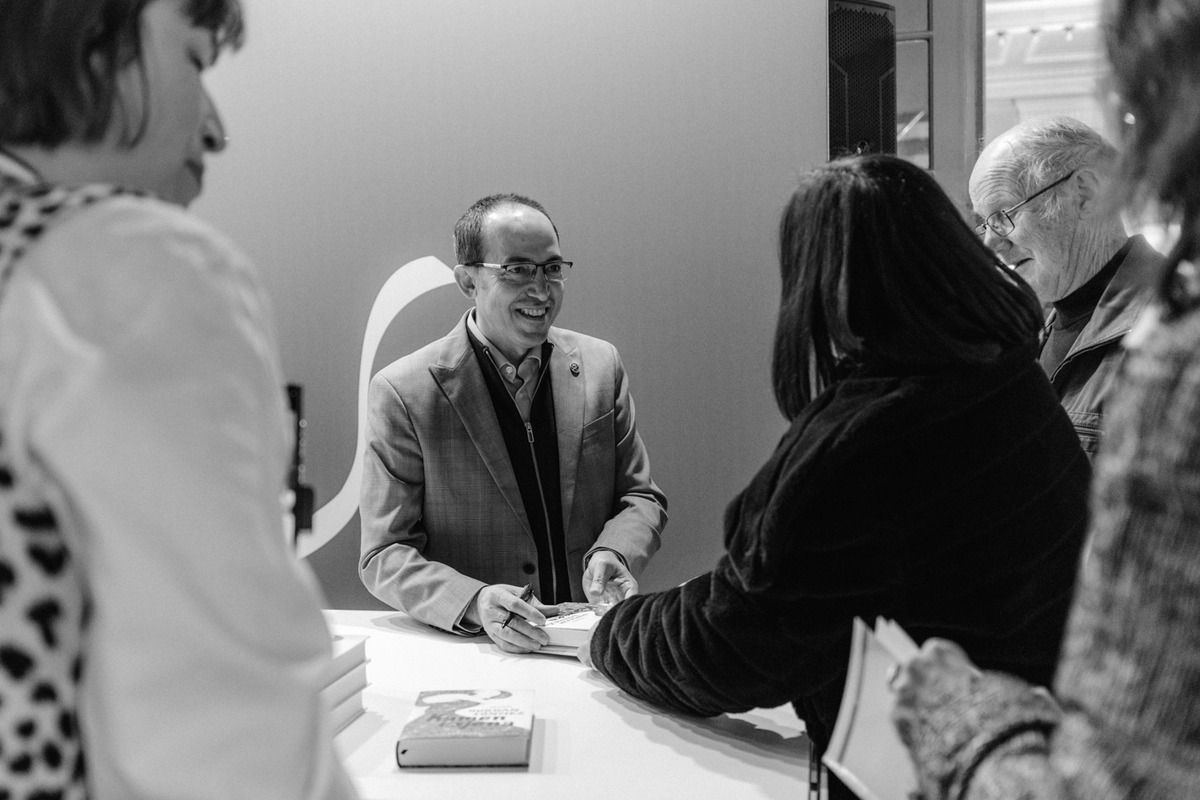
The unique world of Burhan Sönmez, the great Turkish writer of Armenian descent, who presides over the Turkish PEN International, “sailed” into the White and Black Sea program. The presentation of his novel Kamen i sjena (Stone and the Shadow, Fraktura) was one to remember, with an excellent interpretation provided by the Turkologist Alen Matković and moderatedled by the fantastic Emir Imamović Pirke. By pointing out the multi-layeredness of the great, character- and story-packed novel by the author they call the Turkish Marquez, he also opened questions of the political and societal context of his creation and activism. “The logic of every government, be it nationalism or some other political ideology, is that politics is always trying to impose some ideology or some other memory onto the people”, said Burhan Sönmez. Of Istanbul, which has an important place in this novel and other works such as the novel Istanbul, Istanbul as well as in life, he said: “It is a city which offers endless inspiration and my arrival to Istanbul, to which I came from a small Kurd village where I spent my childhood, was like a meteor which fell on earth and created a crater in my life.” Yesterday’s Breakfast with the Author, in which Aljoša Pužar hosted Sönmez, was a true intellectual goldmine. The great writer, who inherited his narration skills from his mother, rooted in the Kurdish narrative literary tradition, was, in his literary beginnings, as he says, “an unsuccessful poet”. Sönmez, who is also a human rights activist, started his career of writing novels after being wounded by the police. “The Turkish police, whom I thank, caused my great physical and mental trauma, due to which I couldn't read or understand what I was reading, and while lying in bed and waiting for my operation I began to write small notes that disappeared in insomnia and darkness. When I came abroad, I realised that this could be a novel, and since I couldn't work at the time, I began my writing career”, said Burhan Sönmez, today the author of six novels, the last of which is dedicated to Kafka.