
27th November - 6th December 2026
9:00 - 21:00
House of Croatian Defenders
Leharova 1, Pula
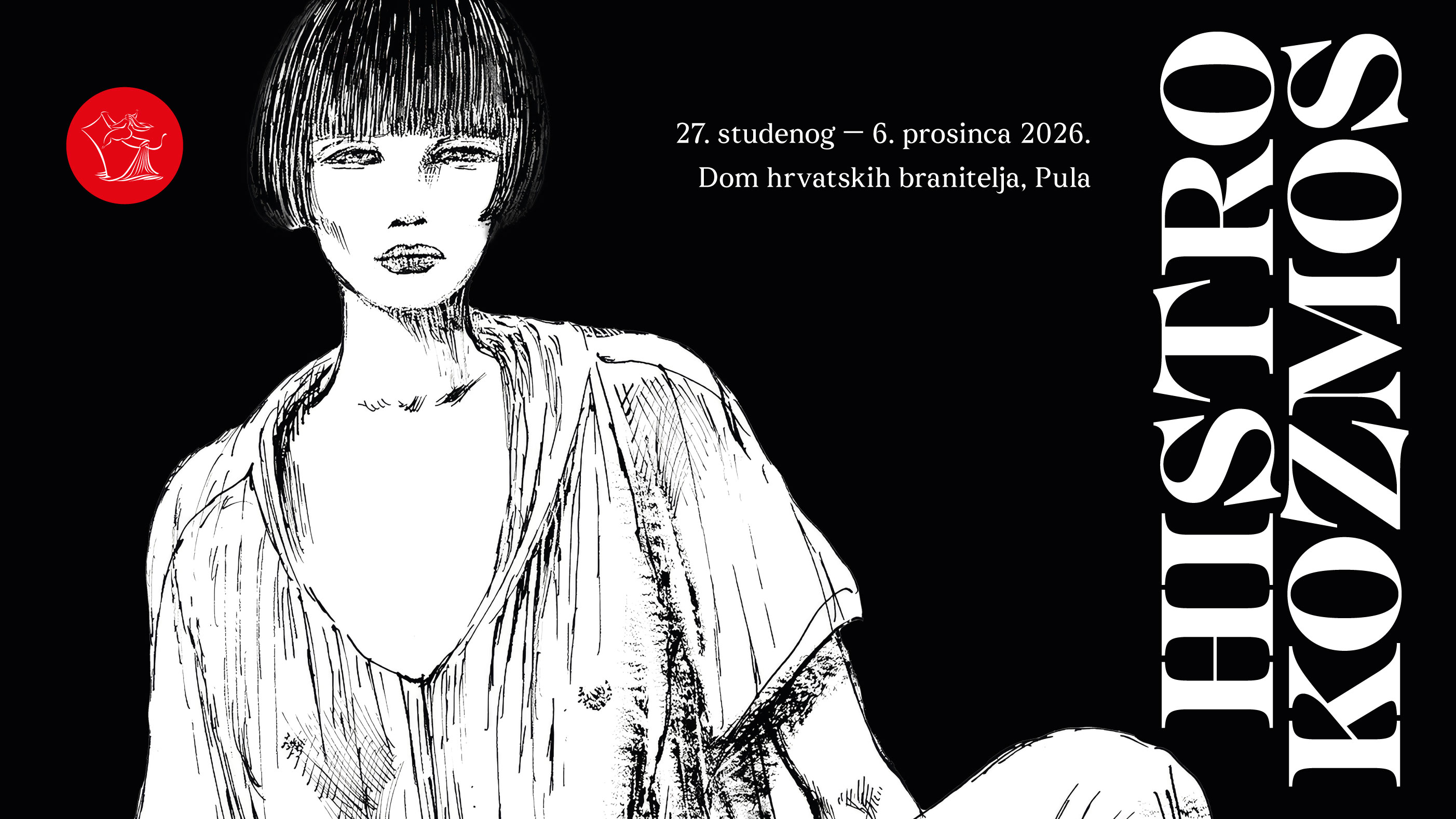
The special features of the fourth Histrokozmos are the first Croatian edition of the comic book Anthropology by Guido Crepax, one of the most important European comic artists of the twentieth century and the return of the Post scriptum wine of the Fair, as well as the books about the Istrian music legend Franci Blašković, the iconic taverns of Pula, the controversial Vargarola accident...
Histrokozmos, the programme unit of the Pula Festival of Books and Authors dedicated to the research and preservation of local identity, presents the best of Istria for the fourth year in a row at the 32nd Book Fair in Istria from November 27 to December 6 at the Home of the Croatian Homeland War Veterans, Pula. This year's edition connects heritage and modernity, established authors and new creative focal points of the alternative Istrian scene, investigating the Istrian character through books, comics, enogastronomy, fanzines, and music.
The books that will be presented at the 4th Histrokozmos will certainly be remembered in Istrian publishing, and many of them have their premiere at the Fair. Historian Darko Dukovski will present the long-awaited book Smrt u Puli, which deals with the controversial historical period in Pula, between 1945 and 1947, and touches upon one of the most painful historical moments of this city - the Vargarola accident.
Nova knjiga o Istri (Čakavski sabor, Istrian branch of DHK), edited by Boris Domagoj Biletić, follows and exceeds the famous work Knjiga o Istri by Tone Peruško, while Oštarije Pula (Croatian University Press) by Franko Lukež talks about Istria from a gastronomic angle. It is the second book in the Lukežijana series, dedicated to the work and legacy of one of Croatia's most respected enogastronomy experts, responsible for putting Istrian enology and gastronomy on the world map. Krnica na pjatu - Kuharica none Albine by Klara Buršić-Matijašić (Josip Turčinović) is also written in the same Lukežijana spirit.
Ivona Orlić's new work Franci Blašković: konstrukcija suvremenoga istarskog identiteta (Croatian University Press, Historical and Maritime Museum of Istria) will be presented, dedicated to one of the most original figures of the Istrian music and cultural scene. Teodora Fonović Cvijanović and Vanesa Marčeta Vitković follow the history of Istrian journalism in the book Od Naše sloge do Glasa Istre: Istarske novine kroz jezičnu prizmu (Croatian University Press), and Lara Černicki and Stašo Forenbacher discover Istria through its roads, landscape and less-known cultural and natural heritage in the book Istra pješice i biciklom (Libricon).
The special feature of this year's Histrokozmos is the first Croatian edition of the comic Anthropology by the Italian author Guido Crepax, one of the most important European comic artists of the twentieth century. It is also the first edition of the newly founded Histrokozmos library, whose launch represents the highlight of the programme sharing the same name. The comic will be published jointly by Castropola and the Fair(y) Book Association in Istria, with the sponsorship of the Public Institution Kamenjak, with Vjeran Juhas resposnisble for its graphic design.
Anthropology was created in 1977, when Crepax stayed in Premantura with a group of Italian intellectuals as a guest of art historian and academic Vera Horvat Pintarić. It is then no surprise that in this edition the main character, Valentina, remembered in the comic world as a symbol of freedom, erotic emancipation and artistic experimentation, walks through Premantura, Cape Kamenjak and Pula, with Crepax’s illustrations immortalising the Istrian landscape in the heritage of world comics.
In the afterword to the Croatian edition, Miljenko Jergović writes about the unusual encounter between Crepax’s world of comics and the real Istria, noting that Istrian landscapes can be recognised in his drawings, while also emphasising that “what is authentic in Guido Crepax’s work is never realistic”.
Crepax’s comic will be presented for the first time as part of the programme La vita è bella, which centres around the topic of the 32nd Book Fair. The same programme will also feature Lidija Matticchio Bastianich, a true star, author of internationally acclaimed culinary bestsellers, television host and promoter of gastronomy, who will speak, in her hometown, about her autobiographical book Moj američki san (Ex Libris).
Apart from the comic, the Fair’s Post Scriptum wine, which first made its mark at the 15th Book Fair(y) in Istria, will also be presented. Back then, it was created in collaboration with the Demian wine cellar, while this time it is produced in collaboration with Diković Winery. The label is once again designed by artist Mauricio Ferlin. Post Scriptum is envisaged as a wine to be enjoyed after a successfully written book or a text, or in the words printed on Ferlin’s label: „Na kraju libra / pokle zadnje beside / prazna je harta / zove pensire“ (At the end of the book / after the final word / the page is empty / calling for thoughts).
Tastings and discussions will take place in the programme Wine Tales. Over the course of the ten days of the Fair, six Istrian wineries – Diković, Medea, Babos, Benazić, Memento Moris, and Siljan – will present their wineries and the wine culture of southern Istria. Although Wine Tales has already become a traditional part of Histrokozmos programme, it will return in a somewhat different format. In addition to winemakers, sommeliers from the Croatian Sommelier Club and moderator Marko Percan, the discussion will also include wine rhapsodists – connoisseurs and explorers of Istria will share stories about wine. These roles will be taken on by art historian Ivan Matejčić, who is also the patron of the Fair’s Post Scriptum wine, academic and archaeologist Robert Matijašić, historian Maurizio Levak, and ethnologist Noel Šuran.
In addition to the ninth art, the Book Fair’s stall Alternative Oases of Istria will also draw attention to the urban culture and with it associated creative impulses that have emerged on the Istrian peninsula, which, despite their contemporary character, remain distinctly local and inseparable from Istria’s unique identity. Apart from the works published by famous publishing houses, the stand will also reflect on the culture of fanzines and small vinyl records, DIY expressions, and underground culture.
Oleg Morović from the Urban Culture Spaces Association has brought together around 30 exhibitors, individual creators and collectives, primarily from Istria, but also from other places in Croatia and the wider region in the Istrian Fanzinoteka, which connects the hubs of the alternative scene from Umag (Fobija), through Buje and Brtonigla (Sfera), Novigrad (Mora) and Poreč (Ko_laboracija, Remont), to Pazin and Labin (Forma, Urban Sketchers), as well as Fažana and Pula (Prostor urbane kulture).
Alternative culture will also be represented through music. Vinyl enthusiasts from Toon&Tunes, a festival bringing together record collectors, illustrators, and lovers of music and comics, will perform alongside key record labels from Istria’s underground electronic music scene. Their representatives, Ivan Ljutić (Forbidden Dance Records), Andrej Lasić (Cosada Records) and Alen Špionjak (Vakum Records), will speak with Nikša Dragulin about the origins and expressions of the new wave of analogue culture on the Istrian peninsula. Following the discussion, the audience will also have the opportunity to hit the dance floor to a morning DJ set.
